A good pan makes cooking easier and more enjoyable. But how do you choose the right one with so many options out there? Don’t worry – this blog will guide you step by step. We’ll explain which pan suits your cooking habits, how to choose the right size, and what to keep in mind when cooking on induction.
1. Which pan suits your cooking habits?
Let’s start with the basics. Think about what you cook most often: frying eggs, pasta, sauces, stir-fries, or hearty stews?
This table gives you a quick overview of which pan works best for each type of dish:
What you cook often Best pan for the job
- Eggs, fish, pancakes: Non-stick frying pan with PFAS-free ceramic coating
- Meat, chicken, potatoes: Stainless steel pan or carbon steel pan
- Curries, one-pot meals, sauces: Sauté pan or skillet with high sides and a lid
- Slow-cooked or oven dishes: Cast iron cookware
💡 New to cooking? Start with a pan set containing two basics:
- A ceramic non-stick pan: for delicate foods like eggs or fish
- A stainless steel frying pan: for high-heat searing and browning
📏 We recommend a 24 cm and 28 cm pan to cover most daily needs.
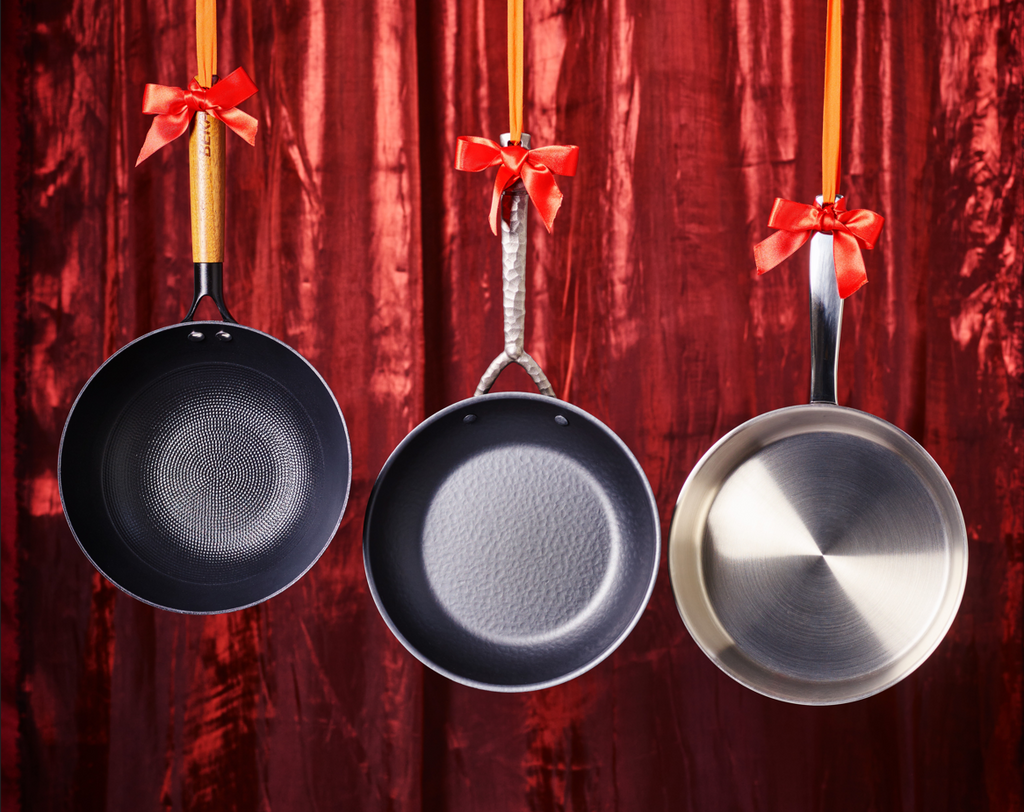
🧑🍳 Want a third pan in your starters set?
Choose a sauté pan - also known as skillet - a multi-tasking pan with higher sides, perfect for stews, sauces and everyday
meals. Available in stainless steel or PFAS-free non-stick aluminium.
2. What size pan do you need?
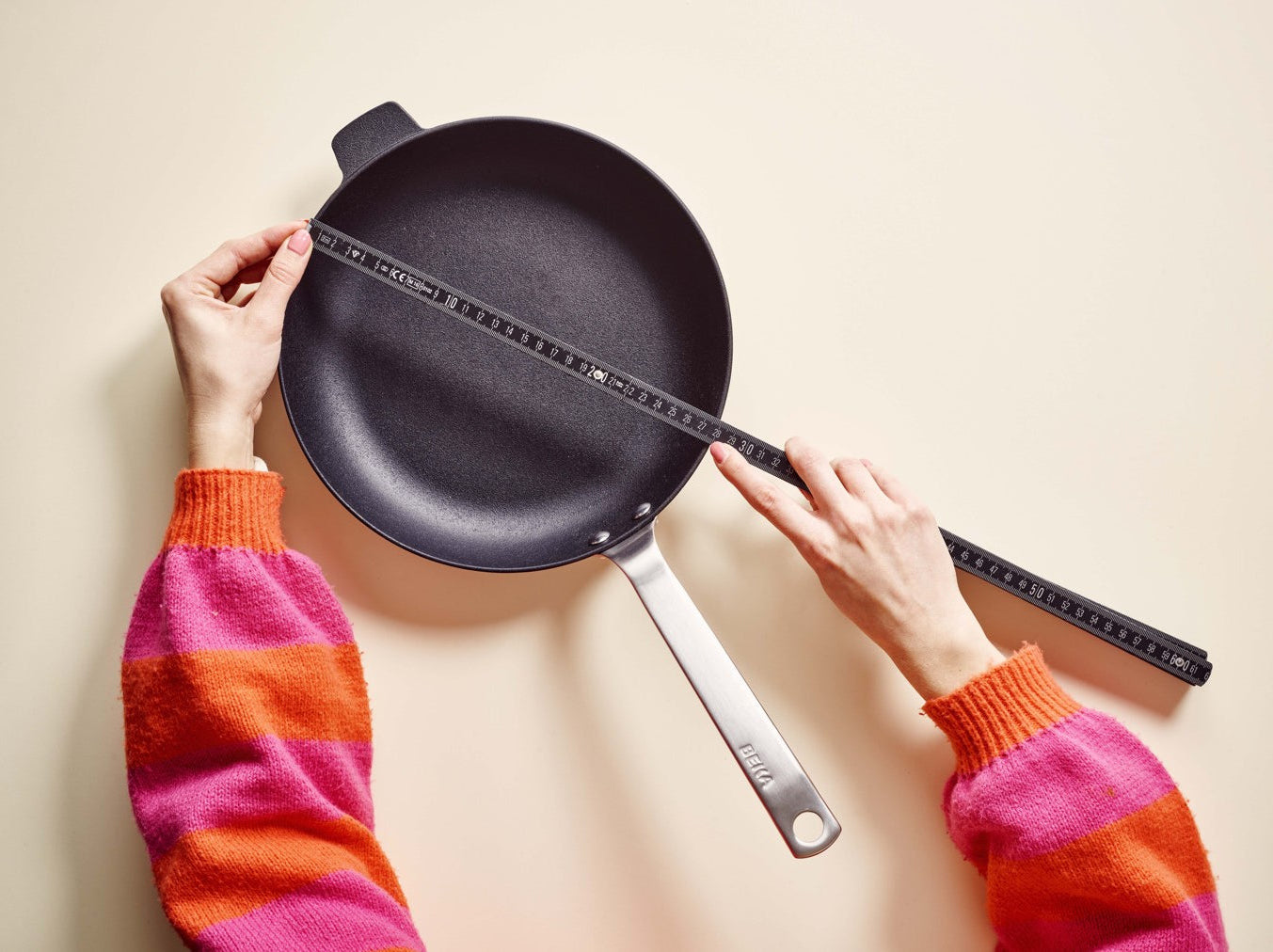
How many people are you cooking for? Match your pan size accordingly. Your pan size affects how much you can cook – and how efficiently you use your heat source.
- 1 person: 20 cm
- 2 people: 24 cm
- 3–4 people: 26–28 cm
- 4+ people: 30–32 cm
💡 Cooking extra portions or batch cooking? Size up for more flexibility.
3. Cooking on induction? Here’s what to check
All Beka pans are compatible with induction, gas, electric and ceramic hobs. But to get the most out of your induction pan, you need to know two things:
- Top diameter: the full size of the pan
- Induction base diameter: the part of the bottom that touches the induction zone
👉 If the induction base is too small, your hob may not detect the pan – or it may heat slowly or unevenly.
📍 You’ll find both measurements on each product page on the product detail pageon our webshop and on the packaging of each Beka product.
Cooking with gerecycled and PFAS-free materials
All Beka pans are made with PFAS-free coatings for safe and sustainable cooking, without compromising on performance.
We also use RCS-certified recycled materials in many collections to reduce environmental impact.
Ready to find your perfect pan?
The right pan makes everyday cooking faster, healthier, and more enjoyable. Think about what you cook most, how many people you’re cooking for, and what kind of stove you use – and you'll easily find your match.
How to care for your pan (and make it last)
At Beka, we believe in long-lasting cookware. A quality pan deserves proper care – and with just a few simple habits, your pan will serve you for years.
Our essential pan care tips:
❌ Don’t pour cold water into a hot pan: let it cool first
⏳ Avoid thermal shock to prevent warping
🔥 Heat your pan gradually. Cooking on ⅔ power is often enough
💡Don’t use metal utensils on non-stick surfaces
🧼 Wash non-stick pans by hand with warm water, a mild detergent, and a soft sponge
Need help removing stains or doing periodic maintenance?